
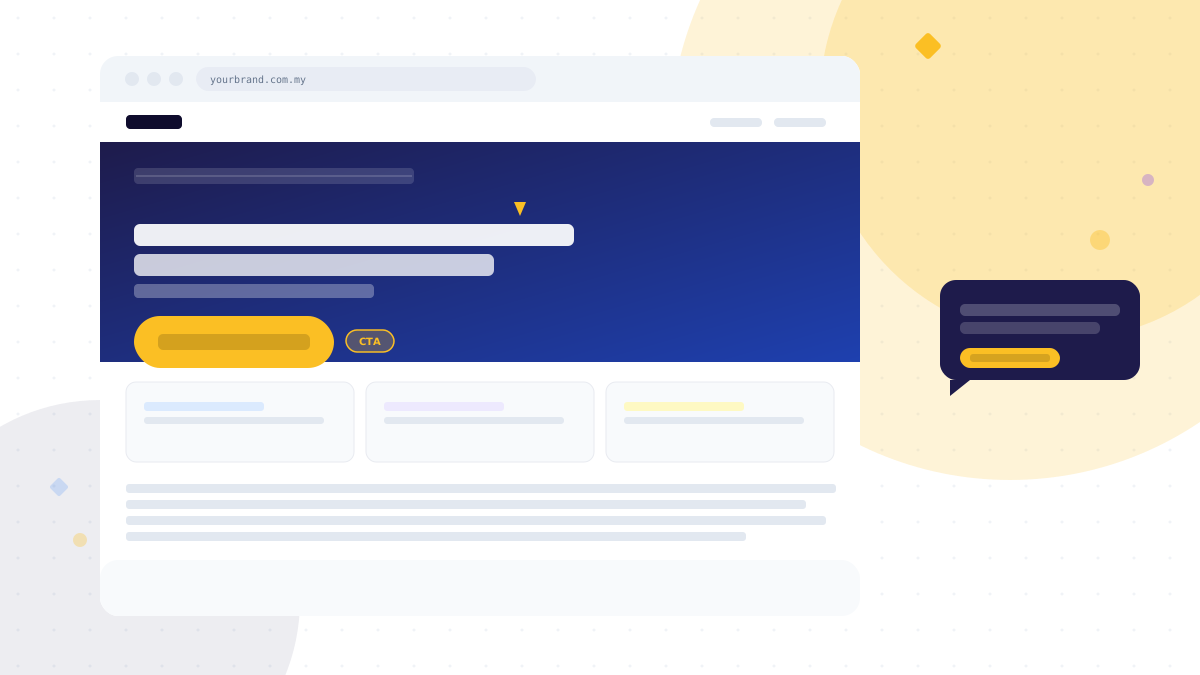
A lot of businesses spend more time choosing fonts and colours than thinking about what their website actually says. This is understandable — design is visible, and good design feels like progress. But the words on your homepage determine whether a visitor stays, reads further and eventually enquires.
Design draws people in. Copy is what makes them trust you enough to act.
Start with a clear, specific headline
Your homepage headline is the single most important piece of copy on your website. It needs to communicate what you do, who you help, and why it matters — ideally in one or two lines.
The most effective headlines are specific, not clever. "Premium website design for Malaysian service businesses" tells a visitor more in five seconds than "We build brands that inspire." Inspiration is nice. Relevance is what keeps people reading.
Ask yourself: if a stranger read your headline and nothing else, would they know if this business was for them?
Test This
Remove your logo and company name from your homepage. Does the remaining copy still make it clear what you do and who you help? If not, the headline needs work.
Say clearly who you help
Many businesses write copy that is technically accurate but speaks to no one in particular. "We help businesses of all sizes with their digital needs" does not make anyone feel seen.
When your copy speaks directly to a specific type of person — a founder scaling their first product, a local service business tired of relying only on referrals, a Malaysian brand ready to compete properly online — those people feel understood. And people who feel understood are much more likely to enquire.
Specificity does not shrink your audience. It focuses it. And focused attention leads to better enquiries.
Name the problem your customer is dealing with
Before presenting your solution, briefly acknowledge the situation your visitor is in. This is not about dwelling on pain — it is about signalling that you understand their world.
A line like "Most business websites look presentable but generate almost no enquiries" will resonate immediately with anyone who recognises themselves in it. It does not need to be elaborate. Just accurate.
When visitors feel understood, they lower their guard. That is when your copy starts working.
Show the outcome, not just the process
Visitors care less about what you do than about what they will get. A website design service is the process. "A website that explains your business clearly and generates consistent enquiries" is the outcome.
Lead with outcomes. Explain the process as supporting detail. When someone can picture the result of working with you, the decision to reach out becomes easier.
Keep service descriptions simple and outcome-focused
When listing your services, resist the urge to describe everything you do. Focus on what the client receives and why it matters to them. Each service description should answer: what is this, who is it for, and what does the client walk away with?
Short paragraphs or structured descriptions work better than long blocks of text. If a visitor has to read three paragraphs to understand what a service involves, they will skip it.
Use proof to support your claims
Any claim you make about your business — quality, reliability, results, experience — becomes more credible when supported by evidence. Testimonials, portfolio work, client names and case study links all serve this purpose.
Proof does not have to be overwhelming. Even one well-placed testimonial or portfolio reference near a key service section can significantly increase a visitor's confidence. Browse our work page for examples of how MuckaMedia presents client projects.
Avoid vague phrases that mean nothing
Certain phrases appear on almost every business website and mean almost nothing to the visitor reading them:
- "We are passionate about what we do"
- "We deliver results-driven solutions"
- "Your success is our priority"
- "We go above and beyond"
These phrases feel safe but communicate nothing specific. Replace them with concrete descriptions of what you actually do, the specific outcomes you deliver and real evidence of your work.
Make the call-to-action clear and repeated
Tell visitors exactly what to do next and make it easy. "WhatsApp us," "Request a quote," "Book a free consultation" — these are clear actions. "Get in touch" with no further direction is not.
Include a call-to-action in the hero section, after your services, and again near the bottom of the page. Visitors scroll at different speeds and arrive ready to act at different points. Give them the opportunity at each stage.
Example homepage copy flow
Suggested structure
Ringkasan Bahasa Melayu
Ramai pemilik bisnes tulis homepage yang terlalu fokus pada diri sendiri — "kami dah 10 tahun dalam industri," "kami komited kepada kualiti." Tapi pelawat nak tahu satu benda je: adakah ini untuk saya?
Copy yang bagus terangkan dengan cepat siapa yang anda bantu, masalah apa yang anda selesaikan, dan apa yang perlu mereka buat seterusnya.
Kalau perlu lebih dari 10 saat untuk faham apa yang bisnes anda buat, copy tu perlu diperbaiki sebelum anda habiskan lagi duit untuk tarik orang ke website.
Industry Note
The Nielsen Norman Group found that users read an average of 28% of words on a page per visit — and that number drops as pages get longer. This is why homepage copy must lead with the clearest, most specific message possible. Burying your value proposition below the fold, or wrapping it in vague language, means the majority of visitors will never reach it.
MuckaMedia Take
Good homepage copy does not need to sound fancy. It needs to make your business easy to understand.
When visitors quickly grasp your value — who you help, what you offer and what they should do next — they are far more likely to trust you, continue reading and take that first step. The words matter more than most business owners realise.
Need help writing clearer website copy?
MuckaMedia helps brands shape website messaging that sounds clear, confident and conversion-focused — without losing the brand's personality.
Start Your Website Project →